Zitro’s Fantasy Cabinet: How Modern Slot Machine Hardware Enhances Casino Gaming
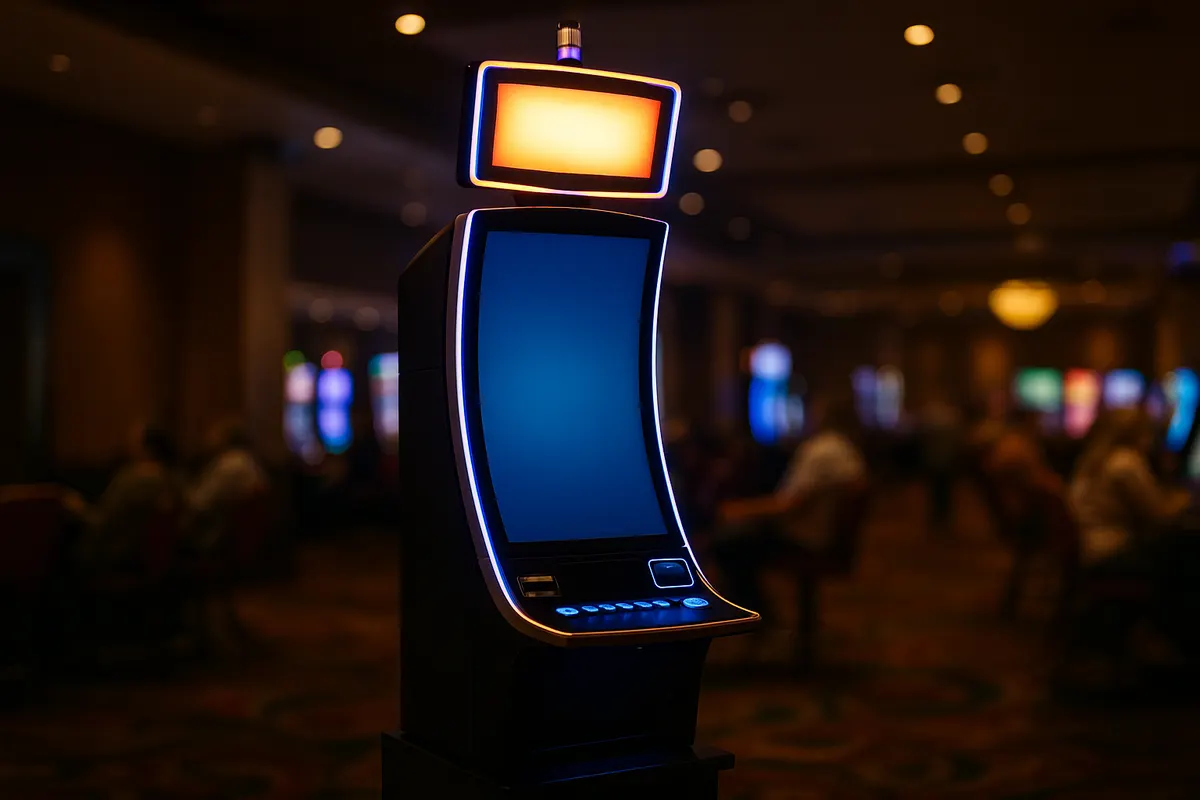
You spot it before you decide to play it. Walk onto the floor at Casino Buenos Aires and the Zitro Fantasy cabinet is doing exactly what it was engineered to do: pulling your eye from twenty metres away with a lit topper, a tall display and a silhouette that doesn’t look like the beige boxes that dominated casino floors fifteen years ago. Then you sit down. The chair fits. The screen sits at eye height instead of forcing your neck down. The audio is aimed at your head, not at the whole aisle. None of that changes the math of the game you’re about to play, and that distinction is the whole point of this article.
Zitro announced the installation of Fantasy at Casino Buenos Aires with three titles on board: the exclusives Brave Dragon and Lion Falls, plus Legendary Hammer, a game recently launched in the region. It’s a small news item on its face. It’s also a decent window into how modern slot machine hardware is put together, and why a physical cabinet produces a different experience from the same style of game played on a phone.
What the Zitro Fantasy cabinet actually is
The Zitro Fantasy cabinet is a slot machine housing, not a game. That’s the first thing worth getting straight, because players often talk about “playing a Fantasy” the way they’d talk about playing a specific title. A cabinet is the hardware platform: chassis, displays, button deck, lighting, sound, seat, note acceptor, printer, plus the computing hardware and operating system that run the games loaded onto it. The games themselves are separate products that a manufacturer certifies for that platform.
Zitro positions Fantasy as a premium machine built around striking cabinet design and strong floor presence, with each title carrying its own visual identity and high-resolution graphics paired to different game mechanics. Since launch it has become one of the more widely deployed cabinets in the company’s portfolio across Latin America, which is why Casino Buenos Aires general manager Darío Montero described it as a product customers were asking for by name.
The practical difference versus a traditional slot machine comes down to four things: display size and resolution, the way the player’s body interacts with the machine, the audio-visual package, and how quickly new content can be loaded onto the box. Older mechanical-reel and early video cabinets were effectively single-purpose furniture. A modern cabinet is closer to a dedicated games console with a chair attached.
The hardware, component by component
Slot machine cabinet technology has converged on a fairly standard set of subsystems. Manufacturers differentiate on execution rather than concept, so it helps to know what each part does.
Display technology and screen configuration
Premium cabinets moved from small 4:3 video screens to large-format LCD panels, often in portrait orientation or as a pair of stacked displays, plus a separate topper screen above head height. The topper does double duty: it advertises the game to people walking past and carries jackpot meters or bonus animations during play.
Resolution and panel size matter more than they sound. A big vertical display lets a designer fit taller reel sets, cluster grids and full-screen bonus sequences without shrinking symbols to the point of illegibility. Some cabinets add a curve to keep the whole panel roughly equidistant from your eyes. When you hear an operator talk about “high quality graphics” on a machine like Fantasy, the screen is the enabling hardware, and the art budget is what fills it.
Ergonomics: the chair, the deck and the sightline
Cabinet ergonomics is the least glamorous part of the spec sheet and arguably the most influential. Designers work to a handful of measurements: seat height relative to the button deck, the angle of the main display against a seated eye line, armrest and footrest position, and the reach distance to the bet and spin controls.
Get it wrong and players shift position every few minutes. Get it right and they stop noticing the furniture. Modern machines typically combine a low-profile physical button deck, or a touchscreen deck, with a spin button positioned where your hand naturally rests, cupholder and card reader within reach, and a chair that supports the lower back rather than a stool that doesn’t. Some cabinets add USB charging and localised speakers in the seat back so the sound field stays personal.
Game delivery systems
This is the part players never see and operators care about most. Older machines needed a physical board or chip swap and a regulatory sign-off to change a game, which made every title change a slow, expensive job. Contemporary cabinets are built as multi-game platforms: a certified hardware base runs a library of approved titles, and the player picks from a menu, or the operator loads a new certified game package onto the box.
That’s how a cabinet arrives at a property with a specific trio of games, as Fantasy did at Casino Buenos Aires with Brave Dragon, Lion Falls and Legendary Hammer, and gains more over time. Game delivery is also why titles proven in one market get rolled into another quickly: the software travels, the hardware is already installed and certified.
What the box changes about how you play
Here’s the honest version. Casino gaming cabinets change the experience of playing. They do not change the outcome. The return to player and volatility of a slot are properties of the game’s math model, certified by a testing lab and approved by the regulator. A bigger screen, a better chair and a louder topper do not move the RTP by a fraction of a percent, and the house edge stays exactly what the paytable says it is.
What the hardware does affect is attention and comfort, and those are worth naming clearly because they influence how long people sit. A large display makes a bonus round read as an event rather than a small animation. Directional audio ties sound to your machine instead of the room. Seating that supports your posture removes the natural physical cue that ends a session. Lighting on the cabinet frame reacts to features, so wins and near-misses get amplified beyond the pure symbol result.
That’s design working as intended, and knowing it is the best defence a player has. If you’re going to sit at a premium cabinet, set a budget and a time limit before you put money in, because the furniture is not going to remind you.
Cabinet versus browser: what the hardware buys you
Land based casino hardware and an online slot can run near-identical math with wildly different sensory results. The comparison below is about the delivery layer, not the odds.
| Element | Land-based cabinet | Online / mobile |
|---|---|---|
| Display | Large-format panel plus separate topper screen at eye level | Phone or laptop screen, single view, symbols scaled down |
| Audio | Multi-channel, often seat-mounted and directional | Phone speaker or headphones |
| Controls | Physical button deck with tactile feedback, fixed positions | Touch targets on glass, layout varies by device |
| Seating | Purpose-built chair matched to deck and sightline | Wherever you happen to be |
| Game library | Limited to titles certified and loaded on that cabinet | Hundreds to thousands of titles, instant switching |
| Social layer | Shared floor, visible jackpot meters, other players nearby | Solitary by default |
| Pacing | Slower: physical spin input, floor distractions, cash handling | Faster: autoplay, turbo spins, no friction |
| Odds and RTP | Set by certified game math, not the cabinet | Set by certified game math; some titles ship multiple RTP versions |
The pacing row is the one most players underestimate. A cabinet imposes friction: you feed notes, you press a real button, someone walks past. Online play strips that friction out, which means more spins per hour and more money through the game in the same session length. Neither format is “better value” in any mathematical sense. They just spend your bankroll at different speeds.
Why operators keep writing cheques for new cabinets
Zitro gaming machines, and premium cabinets generally, sell on floor economics. A modern machine costs real money to buy or lease, so the business case has to stack up on three fronts.
- Attention per square metre. Casino floors are a competition for eye contact. A tall cabinet with a lit topper earns notice from across the room, which matters when a property has hundreds of machines fighting for the same walk-by traffic.
- Content flexibility. A multi-game platform lets an operator swap titles as player preferences shift, without replacing furniture. The cabinet is a long-term asset; the games on it are refreshed inventory.
- Proven performers. Manufacturers pitch titles on track record in other markets, which is exactly how Brave Dragon, Lion Falls and Legendary Hammer were positioned for Argentina. Operators buy known quantities, not experiments.
Zitro’s regional director for Latin America and the Casino Buenos Aires management both framed the installation in those terms: a premium product, requested by players, added to broaden the floor’s entertainment mix. That’s the whole industry logic in one sentence. Hardware is how a land-based venue offers something a phone cannot copy.
Questions players ask about modern cabinets
What makes modern slot cabinets different from older machines?
Large high-resolution displays in place of small video screens, a separate topper, engineered seating and button-deck geometry, richer directional audio, cabinet lighting tied to game events, and a multi-game software platform that lets operators load new certified titles without changing the hardware.
Does a better cabinet improve my chances?
No. RTP and volatility come from the certified math model of each individual game. The cabinet renders the game; it doesn’t influence the random number generator or the paytable. Two machines showing the same title can look very different and still return the same long-run percentage.
Is land-based or online slot play the better experience?
They answer different needs. A cabinet gives you scale, tactile controls and a shared room. Online gives you library depth, lower minimum stakes on many titles and no travel. Both carry a house edge, both should run on a set budget, and the faster pacing of online play is worth accounting for when you set one.
If tracking your play stops being straightforward, use the deposit, loss and session limits your operator provides, or the self-exclusion tools available at licensed venues. Slots are entertainment with a built-in mathematical advantage for the house, and that’s true whether the screen in front of you is a metre tall or fits in your pocket.
Tagged: casino technology gaming hardware land-based casinos slot machines Zitro