Why Cities Are Banning Gambling Ads in Public Spaces: What It Means for Players
When was the last time you watched a live match, scrolled a sports feed or waited at a bus stop without a betting logo somewhere in your field of vision? That saturation is exactly what city councils have started pushing back against. The city of Salta in Argentina recently passed a gambling advertising ban covering municipal spaces and municipal media, and it is a useful case study because it shows how narrow, local and specific these rules usually are, and how differently they get reported.
Here is what the ordinance actually does, why councils keep reaching for this tool, and what changes (and does not change) for you as a player.
Salta’s gambling advertising ban: what actually happened
Salta’s Deliberative Council approved an ordinance prohibiting the advertising, promotion and dissemination, direct or indirect, of virtual betting and online gaming platforms in municipal spaces and municipal media.
The scope is worth reading carefully, because the detail is the story:
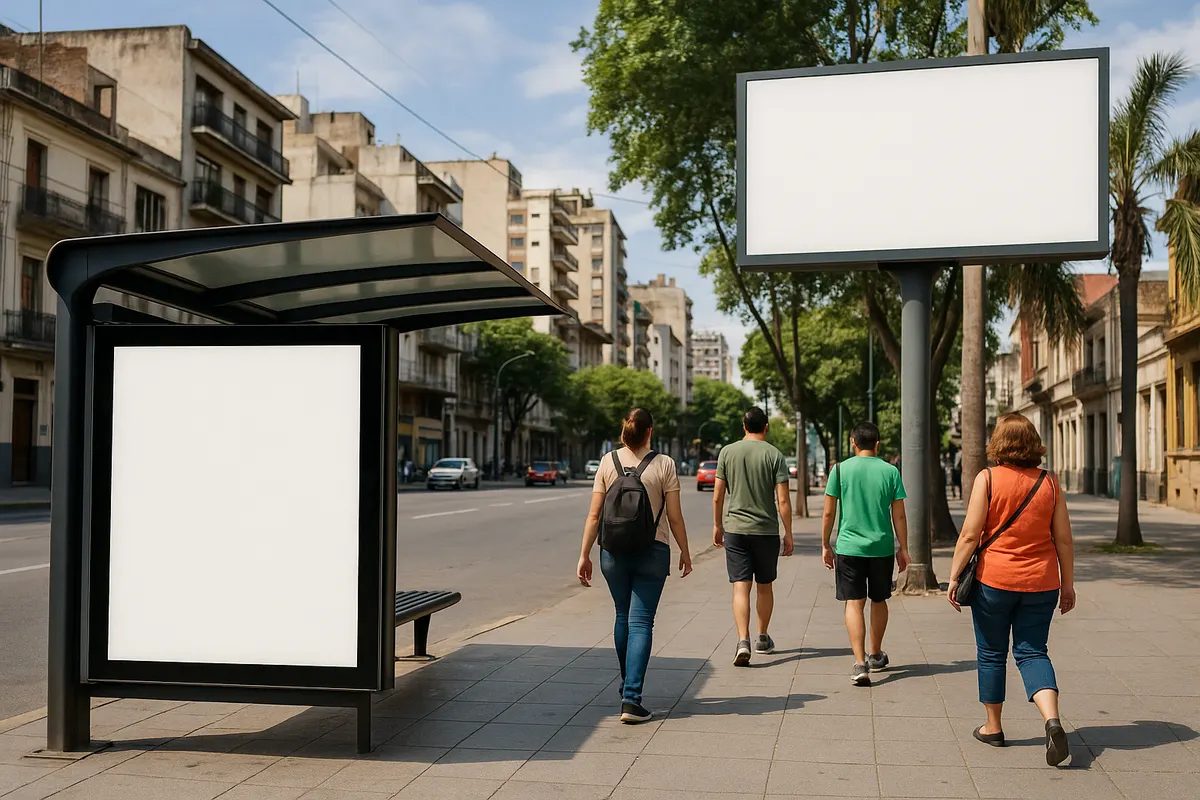
- Physical supports owned by the city are covered, meaning municipal signage, street furniture and similar city-controlled surfaces.
- The municipality’s own digital channels are covered too, so official websites and social accounts cannot carry betting promotion.
- Privately owned signage that is not part of municipal property is excluded. A billboard on a private building is outside the ordinance.
The measure was pushed by the council’s president, Darío Madile of the Partido Salteño, and cleared committee review before getting a favourable opinion. Arguing for the project, Madile leaned on a UNICEF figure he cited for Argentina: 24% of children aged 12 to 17 have admitted betting online at least once. He also made the point that adolescents gamble from a phone, usually in private, which means the marketing reaches them directly rather than requiring them to walk into a venue.
So this is a municipal ordinance about municipal property, not a national ban on betting or on betting operators. Legal online platforms in Argentina remain licensed and regulated at provincial level. What the city removed is its own surfaces from the marketing mix.
Why city councils are restricting betting ads
The reasoning behind betting ad regulation is almost always public health policy rather than moral objection to gambling. Two arguments do most of the work.
Protecting vulnerable populations
Minors and people already showing signs of problem gambling are the groups regulators worry about most, and neither group is well served by constant advertising exposure. A child cannot legally open a betting account anywhere that licenses gambling properly, but a child can absolutely absorb the branding, the odds boosts and the language of “free bets” long before they turn 18. Councils treat municipal advertising space as something they control directly and can therefore clean up without new provincial or national legislation.
There is also a harder point that the industry tends to skip over. Advertising is not distributed evenly. It concentrates where attention is cheapest, which often means younger audiences and lower income neighbourhoods, and those are the same groups where gambling harm tends to land heaviest.
Reducing gambling normalisation
Normalisation is the quieter concern. When betting logos sit on shirts, in stadium hoardings, in every ad break and on public infrastructure, gambling stops reading as a paid entertainment product with a built-in house edge and starts reading as a default part of following sport. That framing matters, because the maths does not change: every casino game and every sportsbook market carries a margin in the operator’s favour over the long run. A 96% RTP slot returns roughly ₹96 per ₹100 wagered averaged over millions of spins, which is another way of saying the house keeps about 4%. Advertising, by design, does not communicate that.
How public space ad restrictions work
Public space ad restrictions apply to surfaces and channels the state or the municipality owns or controls. In practice that means city signage, municipal buildings and land, transport infrastructure where the city owns it, council-run events and the municipality’s official communication channels.
Enforcement is usually administrative rather than criminal. The city stops accepting gambling advertising contracts, existing placements come down as they expire or on notice, and municipal departments become responsible for compliance. Because the rules bind the city itself first, there is no need to chase operators through the courts, which is precisely why this type of ordinance passes more easily than a broad advertising ban.
That also explains the limits. A municipal rule cannot touch private billboards, national television, streaming platforms, affiliate websites, influencer content or the push notifications on your phone. Those require regulators with national reach. The table below shows how different layers of restriction compare in what they actually reach.
| Type of restriction | What it covers | What it misses |
|---|---|---|
| Municipal space and media ban | City-owned signage, municipal buildings, official city digital channels | Private billboards, broadcast, online and social advertising |
| Broadcast time restrictions | TV and radio ads outside a permitted window, or during live sport | Online display ads, affiliates, influencers |
| Sponsorship bans | Shirt fronts, stadium naming, team and league deals | Direct-to-player marketing such as email and app notifications |
| Direct marketing rules | Untargeted ads, bonus offers sent to self-excluded or at-risk players | Brand awareness advertising in permitted channels |
What this means for players
Less than most headlines imply, and more than nothing.
Finding gambling information
An ad ban does not restrict information. It restricts promotion. Licensed operators keep their websites, their terms pages and their game lobbies, and regulators keep publishing licence registers. Review sites, forums and editorial coverage are unaffected by a municipal ordinance.
The practical shift is that discovery moves away from passive exposure and towards active research, which is honestly an improvement. A billboard tells you a brand exists. It tells you nothing about payout speed, KYC requirements, wagering terms or whether the operator is licensed in your jurisdiction. If you are in India, that last point matters enormously given how many offshore brands market to Indian players while sitting outside any framework that would help you if a withdrawal goes wrong. Our guide to gambling regulation in India is a better starting point than any ad.
Impact on promotional offers
Welcome bonuses, cashback and free spins live in operator terms and conditions, not on municipal signage. Advertising rules can change how offers are presented to you (fewer unsolicited pushes, clearer disclosure of conditions, restrictions on targeting people who have self-excluded) rather than whether they exist.
Where these rules do bite, the effect is usually positive: mandatory display of wagering requirements, bans on the word “free” when a deposit is required, and limits on bonus marketing to existing at-risk accounts. None of that removes the catch you should already be checking. A 30x wagering requirement on a ₹1,000 bonus still means ₹30,000 of turnover before withdrawal, and game weighting decides how fast that clears.
How to vet a platform when the ads go quiet
If you can no longer rely on visibility as a signal of legitimacy, and you never really could, use a repeatable process instead:
- Check the licence at the source. Find the licence number in the site footer, then verify it on the regulator’s own register. If the regulator does not list it, treat the claim as worthless.
- Read the withdrawal terms before the bonus terms. Minimum cashout, processing times, KYC triggers and monthly caps tell you more about an operator than any promotion does.
- Work out the real cost of the bonus. Multiply the bonus by the wagering requirement, check game weighting and max bet limits, then decide whether you would have wagered that much anyway.
- Confirm the game maths is published. RTP should be visible in the game info panel. Crash games should offer provably fair verification. Missing numbers are a red flag.
- Set your limits on day one. Deposit, loss and session limits are easier to set before you have a balance you are emotionally attached to. Our responsible gambling guide covers the tools worth using.
The global trend toward responsible gambling advertising
Salta is a small piece of a much larger pattern. Italy introduced a near-total prohibition on gambling advertising and sponsorship under its Dignity Decree, in force since 2019. Spain restricted betting ads to a narrow overnight broadcast window and banned team sponsorship. Belgium moved to a broad advertising ban in 2023, and the Netherlands prohibited untargeted gambling advertising the same year while phasing out sponsorship. In the UK, a “whistle-to-whistle” industry code keeps betting ads out of live sport broadcasts, and Premier League clubs agreed to phase out front-of-shirt betting sponsors.
India has moved on the marketing side too. The Promotion and Regulation of Online Gaming Act, 2025 prohibits online money games along with their advertising and promotion, and government advisories had already targeted surrogate advertising by offshore betting brands using news and entertainment channels. Enforcement continues to develop, so treat the current position as something to verify rather than assume.
What does responsible gambling advertising look like when it is done properly rather than banned outright? Age-gated placement and no appeal to minors. No claims that betting solves financial problems or requires skill it does not require. Full disclosure of wagering requirements next to the headline bonus figure. Help-line signposting and self-exclusion information in the same creative. No marketing to players who have excluded themselves or shown signs of harm. Operators that already do this tend to face fewer restrictions; operators that do not are the reason blanket bans keep passing.
FAQ
Why are cities banning gambling ads?
Mainly to limit exposure among minors and people at risk of gambling harm, and to reduce the normalisation of betting in everyday public life. Municipal bans are also easy to enact because a council controls its own property and media.
Where are gambling ads banned?
Restrictions vary widely. Italy, Belgium and the Netherlands have broad national limits, Spain restricts broadcast timing and sponsorship, the UK uses sponsorship and live-sport codes, and cities like Salta restrict advertising on municipal property and channels.
Do ad bans stop me using licensed betting sites?
No. Advertising rules govern marketing, not whether legal operators can accept play in a given market. Your own jurisdiction’s gambling laws determine what is permitted for you.
Gambling is entertainment with a mathematical cost, not a way to make money. If it stops feeling like a paid hobby, use deposit limits, cool-off periods or self-exclusion, and contact a local support service. This article is informational and is not legal advice.
Tagged: advertising rules gambling regulation industry news player protection responsible gambling