What exactly have ANJL and IBJR filed?
A licence is not a guarantee. Operators that paid BRL 30 million each for the right to run legal betting in Brazil until 2029 have just discovered that in the most direct way possible, and the resulting brazil betting ban legal challenge is now sitting on a Supreme Court judge’s desk.
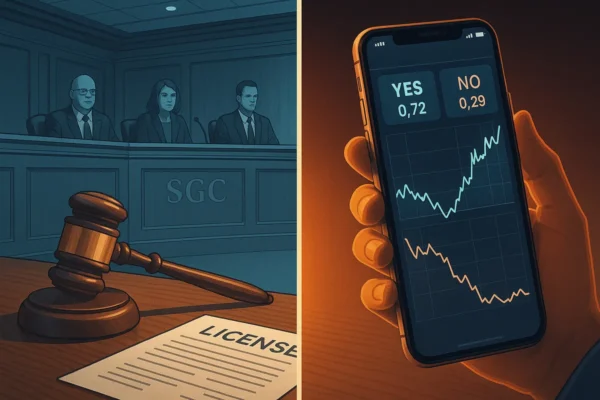
On Monday, September 28, the National Association of Games and Lotteries (ANJL) and the Brazilian Institute of Responsible Gaming (IBJR) went to the Supremo Tribunal Federal (STF) to contest the provisional measure that prohibits betting. Their immediate request is narrow and procedural: suspend the effects of the measure while its legality is examined. They are not, at this stage, asking the Court to settle every constitutional question about Brazilian gambling law in one sitting.
The filing was addressed to Justice Luiz Fux, who is rapporteur of three direct actions of unconstitutionality concerning the betting sector already moving through the Court. That choice matters. Rather than opening an unrelated front, the associations pointed their request at the judge who already holds the sector’s constitutional docket.
What does Brazil’s wagering prohibition actually ban?
The measure was signed by President Luiz Inácio Lula da Silva on Friday, September 25. It orders the immediate interruption of new deposits and new bets on betting platforms, and it requires websites and apps to stop operating from October 6.
Two things are worth separating here. The freeze on deposits and wagering took hold straight away, which means licensed operators were told to stop taking money from customers days before the full shutdown date. The shutdown itself, the point at which sites and apps go dark, is the October 6 deadline. For anyone running a Brazilian-facing product, that is an extremely short runway for balance returns, customer communication, staff decisions and supplier contracts.
A provisional measure, or medida provisória, is a presidential instrument with immediate legal force. It is not permanent law. Congress has to approve it within the constitutional window (60 days, extendable once) or it lapses. So the prohibition arrives with full effect today and an expiry risk tomorrow, which is precisely the kind of instability the associations are complaining about.
The licence money question
The associations raise two main objections. The first is institutional: the measure overrides rules that Congress approved and that Lula himself signed into law, replacing a framework built through the legislature with a single executive act.
The second is financial, and it is the one operators will feel in their accounts. Each licensed company paid BRL 30 million to the government for a five-year authorisation running from 2025 to the end of 2029. The provisional measure establishes that there will be no refund of that payment. Companies are therefore being told to shut down roughly a year into a licence period they paid for in full, with the fee retained.
Who are ANJL and IBJR, and why are they leading this?
ANJL, the National Association of Games and Lotteries, and IBJR, the Brazilian Institute of Responsible Gaming, are the two bodies that have carried most of the licensed sector’s public and regulatory advocacy through Brazil’s transition to a regulated market. Their members are the companies that entered the formal system: applied for authorisation, paid the fee, accepted compliance obligations and built local structures.
That is why they, rather than individual operators, are the natural plaintiffs. A trade association can argue on behalf of the whole licensed cohort, which is a stronger and less self-interested posture before a constitutional court than a single company defending its own revenue. It also spreads the cost and the reputational exposure of suing the presidency.
How does this land on Brazil’s regulated betting market?
The practical answer is that Brazil’s regulated online betting market is currently frozen with a shutdown date pencilled in, and its legal status depends on how quickly a court and a legislature move.
For licensed operators, the immediate work is operational rather than strategic: handling customer balances, honouring open bets where possible, informing players, and pausing marketing and sponsorship commitments that suddenly have no product behind them. Brazil has been one of the most heavily invested regulated markets in Latin America, with sponsorship money running deep into football, so the freeze radiates well beyond gaming companies themselves.
The regulatory certainty problem is harder to fix than the operational one. The selling point of a licensing regime is exactly that it is predictable: pay the fee, meet the conditions, operate for the stated term. A prohibition issued by executive measure, with fees retained and no refund, damages that promise regardless of how the case ends. Investors pricing Brazilian market entry, or any Latin American market that looks structurally similar, now have a live precedent to factor in.
There is also the grey market question, which regulators everywhere eventually confront. Demand does not vanish on a shutdown date. If licensed sites close, some portion of that activity moves to offshore operators outside Brazilian oversight, where there are no local KYC obligations, no deposit limits set under Brazilian rules and no domestic recourse for players. That argument is central to the licensed sector’s case and it is not a purely commercial one.
What happens next, and how fast?
The nearest decision point is the request itself. Justice Fux can grant or refuse an injunction suspending the measure’s effects, and such a ruling can be issued individually before being referred to the full Court for confirmation. Given the October 6 deadline, the useful window for that decision is days, not months.
Beyond that, several tracks run in parallel. The constitutional actions already before the STF continue. Congress has to consider the provisional measure within its validity period, and legislators who built the regulated framework have an obvious institutional interest in how it is handled. Individual companies may also pursue separate claims over the retained BRL 30 million licence fees, which is a different legal question from whether the prohibition itself stands.
| Stage | What it involves |
|---|---|
| September 25 | Provisional measure signed; new deposits and bets halted immediately |
| September 28 | ANJL and IBJR file at the STF seeking suspension of the measure’s effects |
| October 6 | Date from which betting websites and apps must cease operating |
| Injunction decision | Justice Fux may suspend the measure, with later referral to the full Court |
| Congressional vote | The measure must be approved within its constitutional window or lapse |
Three broad outcomes are plausible. The Court suspends the measure and licensed operations resume under the existing framework while the merits are argued. The Court declines to intervene and the shutdown proceeds, pushing the fight into Congress and into compensation claims. Or a partial outcome emerges, where some elements survive and others, such as the no-refund provision, are struck down or renegotiated. Anyone predicting which of these lands, and on what date, is guessing.
What players should do while this is unresolved
If you hold a balance with a Brazilian-licensed operator, read the operator’s own notices rather than relying on secondhand reports, and treat withdrawal instructions and deadlines as time sensitive. Betting is entertainment with a built-in house edge, never a source of income, and periods of regulatory chaos are a reasonable moment to use deposit limits, cool-off tools or self-exclusion if gambling has stopped feeling like a choice. Support services are available free of charge in most jurisdictions.
For a wider view of how the framework got here and how neighbouring jurisdictions have handled similar disputes, see our coverage of Brazil’s gambling regulation and Latin American betting markets.
Tagged: ANJL Brazil IBJR Latin America regulation sports betting